
“The stationery sector has always been a special and indispensable sector, adding value to our lives through the products it sells and the areas in which those products are used. TÜKİD emphasizes in all its work that stationery products are as essential as food and clothing. Through its production and marketing efforts, the stationery sector bears the responsibility for a student’s education, a teacher’s role in shaping a generation, and a nation’s development. Stationery retailers, who produce, distribute, and sell such vital products, are always fully aware of the responsibility they carry. Cihat Yoncalık, one of our many colleagues who adds value to our sector and takes that value a step further through his work, was our guest in this month’s magazine. What began as a simple initiative—which they kindly refer to as “support”—has grown exponentially with the power of social media, transforming into an organization that reaches thousands of children. Yoncalık, who described how they have reached children across Turkey over the years, also noted that they have not forgotten their colleagues in their efforts. We believe you will be just as moved as we are when reading about these efforts, which have also succeeded in keeping the names of our colleagues alive in the schools they support. We, too, take this opportunity to express our gratitude and respect to our elders who have selflessly dedicated themselves to their profession, worked tirelessly, and transformed the stationery trade into a massive industry.”
May we get to know you?
I was born in 1965 in Istanbul. I am originally from Kayseri, married, and a father of one child. I began my stationery career in 1983 at Zafer Kırtasiye, which was owned by my aunt’s husband and operated in Tahtakale at the time. My late father entrusted me there, saying, “His flesh is yours, his bones are ours.”Since the company I joined belonged to a close relative, I initially felt privileged—but that feeling didn’t last long. On my very first day, my colleagues approached me one by one and quietly said, as if I had entered prison, “May God help you.” At that moment, I didn’t understand what they meant. That same evening, my late uncle, Mr. Durmuş Ali Yavuz, called me over and said, “Starting tomorrow, your working hours begin at 7:30 AM. When you arrive in front of the shop, check your watch. If it is exactly 7:30, you may greet and enter. But if you are even one minute late, do not enter—go straight back home.” That was the beginning of my “May God help you” journey.Back then, it wasn’t as easy as it is today to get around. How was I supposed to be in Tahtakale at that hour? I still vividly remember the days when I had to run the last stretch just to avoid being late. The company I worked for was so disciplined that even my 18 months of military service later on felt easy in comparison. I share these memories so that the younger generation can understand…Tahtakale was a place where discipline, tolerance, friendship, neighborliness, camaraderie, and solidarity were at the highest level—a true capital of trade. After returning from military service, I worked there for another three years. Later, I worked at Atılım Kırtasiye, Birlik Kırtasiye, and finally Ceren Kırtasiye. I worked as a regional sales representative in Anatolia, Istanbul, and primarily in my main region, Thrace.In 2005, I opened a small retail stationery shop for my wife in Bayrampaşa, Istanbul. Years later, we had the opportunity to expand the shop, but it became too much for my wife to manage alone. In 2012, I had to leave my position at Ceren Kırtasiye, where I was working as the Thrace Regional Sales Representative. I took over the shop, and I am still continuing in the retail stationery business under the name Çilek Kırtasiye.Whatever we have achieved, we owe first to God, and then to the people I have worked with and earned my livelihood alongside. I pray for mercy upon those who have passed away and wish long lives to their loved ones.
How did the process you’ve been carrying out for years—one you’ve worked on with great care and gently referred to as “support”—begin?
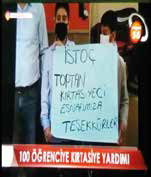
It all started thanks to a friend’s daughter. One day, she came into the shop and said, “Cihat, we’re collecting supplies for a village school—would you be willing to help us?” I was really impressed by this university student’s initiative. I arranged some items for her and asked for the name and location of the school they were helping, jotting it down. Later, in 2017, during the mid-semester break, we set out as a family for a two-day weekend trip to Bursa. Suddenly, I remembered this village school in the Marmara Region that I had noted down. The schools were closed, but thinking we could at least see the village school and the children, we set off for this village school, located in a district of Bursa, 18 km from the district center. When we entered the village, we were very surprised; there couldn’t be a village like this in the Marmara Region. The physical condition of the village was terrible. The children didn’t have proper boots on their feet or coats on their backs. This situation deeply saddened our entire family. In fact, my daughter, who is a teacher, was even more upset. As soon as we returned to Istanbul, I reached out to a teacher friend working there and asked her to provide us with the shoe sizes and clothing measurements of all 45 children attending the school. Thanks to my close friends and colleagues, we were able to send boots, coats, and all kinds of school supplies to every single one of them. They were so happy—I can’t even begin to describe it. When we shared the photos and videos from that village school on social media, those who supported us were even happier.

How did your work spread across Turkey?
During our conversations with our colleagues, we remarked, “If we have village schools like this in the Marmara Region, who knows what kind of village schools we have in Eastern and Southeastern Anatolia.”
As you know, for years, certain people—whose identities and motives were unclear—would collect supplies from our well-meaning local merchants under the guise of a “charity fair.” Who knew where the proceeds from the sale of those supplies actually went? We wondered: Why shouldn’t we collect these supplies ourselves and personally deliver them to village schools in need? Or why not send them directly? That’s how the process began. But where and how would we find the village schools we intended to support? A family friend who saw our first village school support project on social media told me that his childhood friend had also provided significant support to village schools and wanted me to meet him. The next day, I called him to learn more about his work. We explained that we could provide support to village schools, particularly in the area of stationery supplies, and asked him to provide us with the names of the schools, as well as the phone numbers of the administrators and teachers we could contact.
The name of this initiative, which provided every kind of support to the most remote village schools in Anatolia, was the “Raising Awareness Project.” I would like to express my gratitude to them here, on behalf of the stationery industry, through you. In the “Creating Awareness Project,” there were so many of our village schools in the hands of people who were completely dedicated and generous that it was impossible to keep up. While we, as the stationery community, provided all kinds of stationery supplies to those same village schools, they provided boots and coats. In this way, we complemented each other.
As photos and videos arrived from the village schools we were supporting, we shared them regularly on social media. With the help of our stationery merchants—wholesalers, importers, manufacturers, and retailers—who placed their full trust in us, the support had grown exponentially. We now had a massive force behind us. This gave us even more courage. Whenever we had the chance, we would personally visit the village schools we had identified in the Marmara Region with our available friends and distribute the collected supplies with our own hands. We encountered such interesting incidents during this process. I’d like to share a story with you from that time. In 2017, an earthquake struck the Ayvacık district of Çanakkale, causing significant destruction in several villages. For this reason, we decided to bring all kinds of stationery supplies and toys to these villages. People were living in container homes, and children were attending school in container classrooms. We packed the supplies into individual bags and set off for these villages.
When we arrived at one of those villages, the children were playing among the shipping containers, so we gathered them all together and asked them to line up. I’m a Fenerbahçe fan, so I jokingly asked the kids in line, “Who here supports Fenerbahçe?” Perhaps it was just childish curiosity, but most of them replied, “Me, me!” When it was one of their turns, he hung his head and said, “Brother, but I’m a Galatasaray fan—but from now on, I’m a Fenerbahçe fan too.” We were so upset. Even though we gave each child a bag of supplies, we gave this particular child two bags and made him promise he’d never give up on Galatasaray. In another village in the same district, a young boy—whom I later learned was a Beşiktaş fan—came up to me holding a blue bag and said, “Brother, you’ve given us so many things. Let this be our gift to you,” and held out the bag toward me. When I opened the bag, there was melon and watermelon inside. Just like now, my eyes welled up at that moment.
How did people react?
Our colleagues trusted us and gave us a lot of supplies, and we distributed these supplies to places where they were truly needed. This made all our colleagues who trusted us and gave us supplies very happy, because knowing where the supplies they donated were going was everyone’s natural right. After our social media posts, colleagues we didn’t even know reached out to us asking for our IBAN number, expressing their desire to make monetary donations. We explained to them that we weren’t collecting money, only supplies. Following this, in addition to Istanbul, supplies began arriving from places like Tekirdağ, Balıkesir, Ankara, Bursa, Edirne, Malkara, and İzmir. Receiving such supplies from outside Istanbul made us even happier. To the stationery supplies we had set out to collect, we had now added boots and coats. The only thing that truly hurt us during this process was the criticism from some people on social media, who commented under our video and photo posts from the schools with remarks like, “One hand gives, the other doesn’t see.” These people, who cited verses from the Quran, seemed to be living their lives according to those verses! If we hadn’t shared these photos and videos on social media platforms, how would we have collected hundreds of boxes of supplies for thousands of students at hundreds of schools every year? Even during this difficult period when we’re going through such a challenging time, our stationery shop owners have shown great dedication by sending boots, coats, and all kinds of stationery—
While you’re working to meet stationery needs, you’re also doing very valuable work on behalf of our industry. Could you tell us more about that?
During this time, our elders and friends who had rendered immense service to the industry were passing away one by one. During our conversations with friends, we always expressed the need for us to do something about this. And indeed, that is exactly what happened. Our colleagues who dedicated their lives to the stationery industry, who once traveled every corner of Anatolia by truck, who were sometimes stranded on the roads and sometimes spent the night in truck cabins… Some of whom we lost in traffic accidents during business trips on Anatolian roads—those who left us one by one, far from their families, without ever experiencing the joy of a home or the love of children—yet who rendered immense service to the stationery industry’s growth to where it stands today. In fact, some left behind major brands; as a gesture of loyalty to our elders and friends, we wanted to keep their names and memories alive. Over the past 2.5 years, we have supported village schools by commissioning 41 plaques, each measuring 30x42 cm and bearing their names, to be hung in these schools. Of course, there may be some we have overlooked. We will identify them as soon as possible and ensure they are sent to the schools.
Owner of Çilek Stationery
Cihat YONCALIK